
Services · Data Center
From compute to customer outcome.
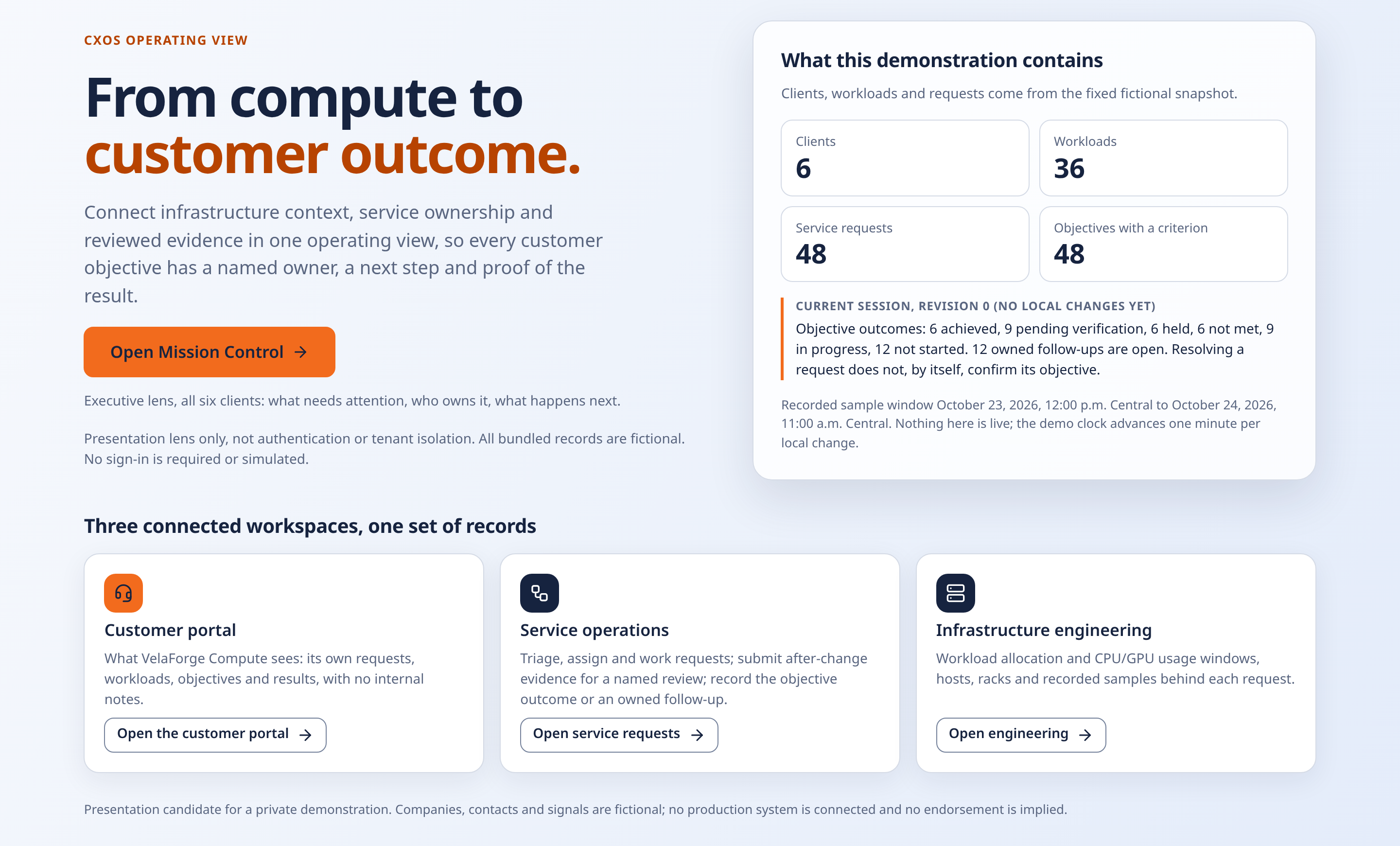
CXOS is MSP Hub's operating view for data center estates: infrastructure context, service ownership and reviewed evidence in one place, so every customer objective has a named owner, a next step and proof of the result.
The gap it closes
Data center teams run strong infrastructure and still struggle to answer the one question a customer asks: is my outcome on track? Requests live in one system, workloads in another, commitments in a slide deck. CXOS connects them into one set of records.
- Objective
- Owner
- Evidence
Three workspaces, one set of records
Customer portal
Customers see their own requests, workloads, objectives and results. Nothing internal reaches the customer view.
Service operations
Triage, assign and work requests. After-change evidence goes to a named reviewer, and objectives close with an outcome or an owned follow-up. Resolving a request does not, by itself, confirm the objective.
Infrastructure engineering
Workload allocation, CPU and GPU usage windows, hosts, racks and the recorded samples behind every request.
The Microsoft layer
MSP Hub brings the Microsoft estate into the same discipline. Azure consumption and licensing sit on one MSP Hub agreement. Azure Arc manages on-premises hosts with the same policies as cloud. Azure Local keeps the workload on your floor with the control plane in Azure. And when a workload's economics say it should move, the migration path is already on the table.
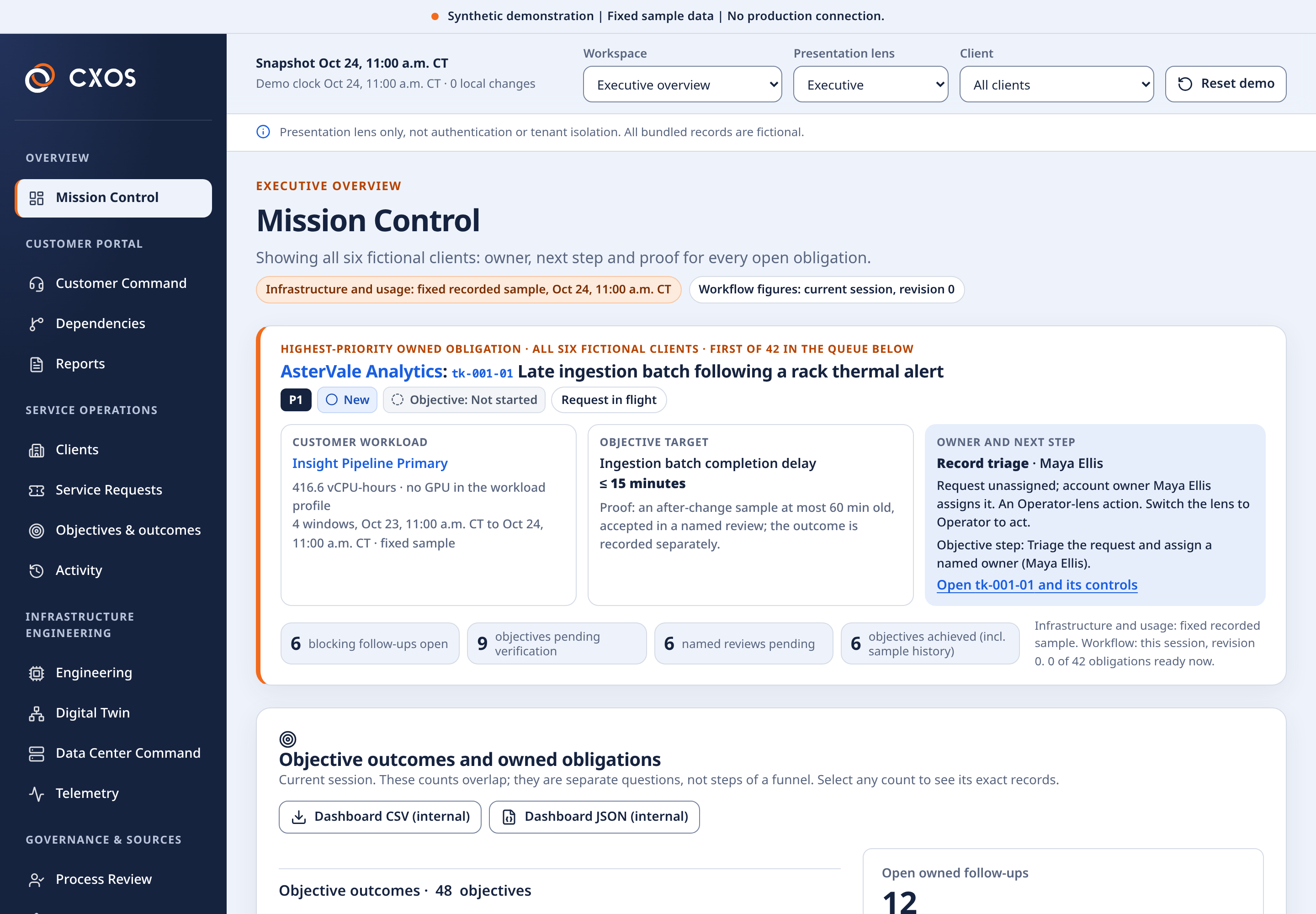
The operating view
One view, three audiences.
Executives see what needs attention, who owns it and what happens next. Operators work the queue. Customers see their own slice. Same records underneath.
How an engagement starts
- 1
Walkthrough
A working session in CXOS against a representative estate, with your scenarios.
- 2
Fit review
We map your systems of record — requests, workloads, commitments — to the three workspaces and show you the gaps.
- 3
Stand-up
Scope, pricing and terms are set in the agreement.
Next step